Sotheby’s chairman paid $8.3 million for a fake Rothko, made in a Queens garage for under $9,000
Sotheby's chairman Domenico De Sole paid $8.3 million in 2004 for a painting he believed was a genuine Mark Rothko, before it was revealed to be a forgery made by an artist working out of a Queens garage.
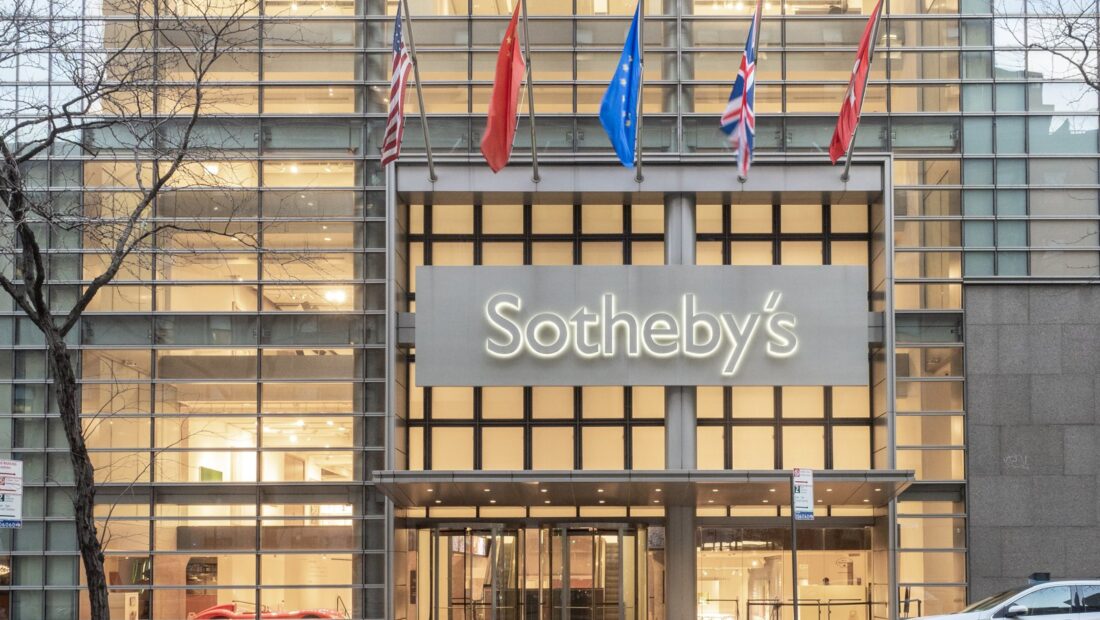
In 2004, Domenico De Sole, chairman of Sotheby’s, paid $8.3 million for a painting he believed was a genuine work by Mark Rothko. It wasn’t. The painting had been made by Pei-Shen Qian, an artist working out of a garage in Queens, for less than $9,000.
The forgery was only caught because the pigments used in the paint had not been invented yet during the period when Rothko was supposedly alive to use them. Until then, it had fooled Knoedler, one of New York’s oldest and most respected galleries, along with outside scholars and even Rothko’s own son, who admitted at the time that he could not rule out that the painting was real.
During the trial over the forgery, one Abstract Expressionist scholar testified that he had, at one point, said that all Rothkos look alike.
Rothko’s genuine works have sold for enormous sums. Seven of his paintings have now sold for over $50 million each, with one holding an $86.9 million record. Rothko himself, however, appeared to have contempt for wealthy buyers of his work. In 1958, he accepted a commission for a series of murals for the Four Seasons restaurant in New York’s Seagram Building, later telling a magazine publisher, “I hope to ruin the appetite of every son of a b*tch who ever eats in that room.” He worked on the murals for two years, then refused to deliver them, returned the fee, and donated the paintings to a museum instead.
Art historian James Elkins, researching people who cry in front of paintings, has concluded that more people have likely wept in front of Rothko’s work than any other painter of the twentieth century.
Leave a Reply