Inside Japan’s eerie job: proving ‘haunted’ houses are safe to buy
A Japanese property firm is paying investigators to spend the night in stigmatized homes and issue reports proving they are free of paranormal activity.
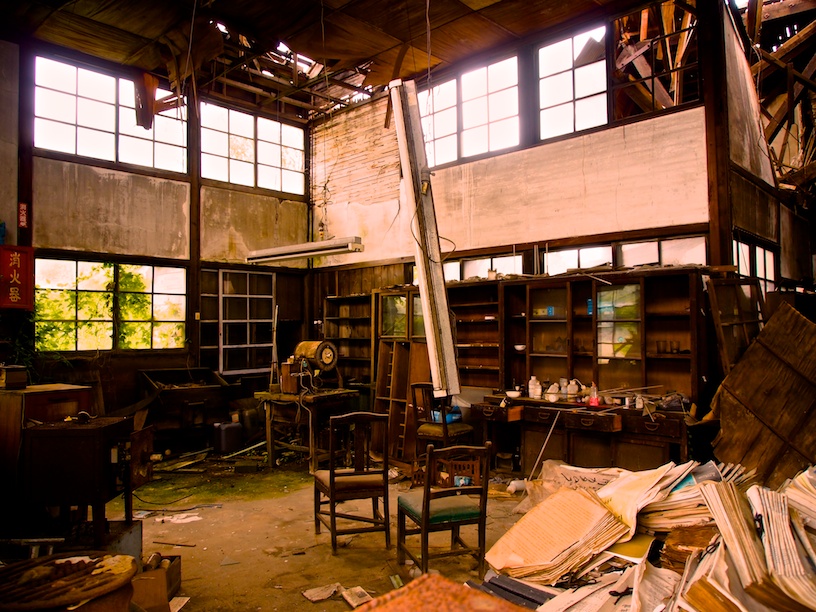
Would you spend a night alone in a house where someone died, for a paycheck? In Japan, that is now an actual job. A property management company called Kachimode offers what it calls a ‘ghost investigation’ service: for 88,000 yen (about Rs 31,000, or $542) per property, an investigator stays inside a so-called haunted home from 10 p.m. until 6 a.m. and produces a detailed report that real estate agents can hand to buyers as proof there is nothing paranormal left behind.
The homes being investigated fall into a category Japan calls ‘jiko bukken,’ or stigmatized properties — places where a suicide, murder, fatal fire, or a ‘lonely death’ (an elderly resident dying alone and remaining undiscovered) occurred. Kachimode president Kazutoshi Kodama explained the cultural weight behind the fear to DW: ‘Death equates to impurity and misfortune,’ he said, describing how many Japanese people won’t even visit such a house, let alone live in it.
During the overnight stay, investigators use video cameras, audio recorders, thermography equipment, electromagnetic wave detectors and sensors that track room temperature, humidity, atmospheric pressure and noise levels — an attempt to apply something like scientific rigor to a deeply superstitious problem. Kodama, who consults a university professor specializing in monitoring supernatural phenomena, said the gear has occasionally caught strange glitches, such as a video camera stopping on its own or a microphone failing, but almost all of these turn out to be one-off and unreproducible. A small subset of properties keep producing unexplained activity over long periods and remain difficult to rent even after being checked.
A single case illustrates why owners are willing to pay for this: a two-storey house in Yokohama has stood empty for at least five years, even though it could be renovated into a perfectly livable home, purely because of its history. Under Japanese law, agents must disclose a property’s stigmatized status to prospective buyers or renters, and websites exist solely to list which homes carry the label. That transparency comes at a cost to owners — rents typically drop around 30% in major cities and up to 50% in smaller towns, and Kodama says he knows of a property that sat vacant for over 1,000 days.
This is playing out against the backdrop of a much larger vacancy crisis. A late-2024 government survey found Japan has nine million empty homes, or 13.8% of all residential properties, a number pushed up by population decline, inheritance disputes and an ageing population, with the death-stigma factor compounding it further. Joey Stockerman of Akiya Mart, another firm working in this space, told of an investor who picked up a stigmatized Tokyo-suburb home for under $5,000 — roughly 5% of its real value — and still couldn’t rent it out for two years. Akiya Mart’s own answer is a package that includes a Shinto priest performing a cleansing ritual on the property before it is remarketed.
Kodama believes the niche has room to grow. ‘Properties where we do find mysterious phenomena are the ones that are typically shunned,’ he said. ‘They are difficult to let or sell. But there are still ways to manage even these properties… I think this sector has potential because there are people in need.’
[Wikimedia Commons/by Syuzo Tsushima]



Leave a Reply