Scientists found a hidden cell that could finally end baldness
A RIKEN-OrganTech study has identified an unknown 'third cell' type that, alongside two known cell types, rebuilt a full, cycling hair follicle in laboratory mice.
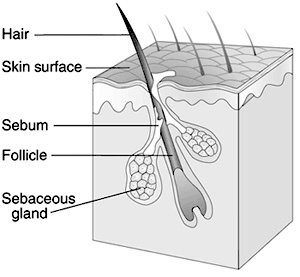
For decades, treatments for thinning hair have mostly done one thing: slow the damage. A new study out of Japan suggests that could be about to change. Researchers at RIKEN Institute and the Tokyo-based OrganTech say they’ve pinpointed a previously unidentified cell type — dubbed a ‘third cell’ — that completes the biological machinery needed for hair to grow and shed through a normal cycle. The research appears in the journal Biochemical and Biophysical Research Communications.
The stakes are large: about 80% of men and 50% of women experience pattern hair loss at some point, and for many it carries a real emotional toll. Most current interventions, including oils and transplants, focus on preserving existing hair rather than regenerating follicles that have already failed. The new work, led by Takashi Tsuji — a visiting senior researcher at RIKEN and chairperson of OrganTech who has spent nearly 20 years on organ regeneration from adult stem cells — targets that exact shortfall.
The project builds on a 2012 milestone in which scientists combined epithelial stem cells and dermal papilla cells from adult mouse whiskers to form a follicle precursor capable of inducing hair growth once transplanted. The catch: after transplantation, outside cells kept migrating in from surrounding tissue to prop up the structure, a sign that something essential was still missing from the lab-built version.
To find it, Tsuji’s team applied specialised cell-isolation methods and zeroed in on around-bulge mesenchyme (ABM) cells sitting in the tissue near the follicle. Layering ABM cells together with the two previously known cell types and transplanting the combination into engineered skin let all three cell types function together — reproducing a complete, repeating cycle of hair growth and shedding in mice under lab conditions.
Beyond simply completing the cell trio, the research revealed something new about the physical mechanics of growing hair: as a strand pushes up through the skin, the hair bulb at the follicle’s base actually moves downward toward the subcutaneous fat layer, a ‘downgrowth’ effect the team traces to the newly found cells as they differentiate and drive the follicle’s extension.
The researchers now envision harvesting these regeneration-supporting cells from patients, growing them in culture, and reintroducing them to areas affected by hair loss as the basis for a future therapy. “This work defines a foundational cellular configuration for functional hair follicle regeneration,” OrganTech CEO Yoshio Shimo said, describing it as part of a wider strategy toward organ-level regenerative medicine.
Image credit: Wikimedia Commons/NIH (public domain).


Leave a Reply