It’s not just kitchen foil, this reflector is precisely shaped for your room
WiPrint, a system developed at Dartmouth College, uses aluminium-coated reflectors custom-shaped for a room's layout, not ordinary kitchen foil, to redirect Wi-Fi signals indoors.
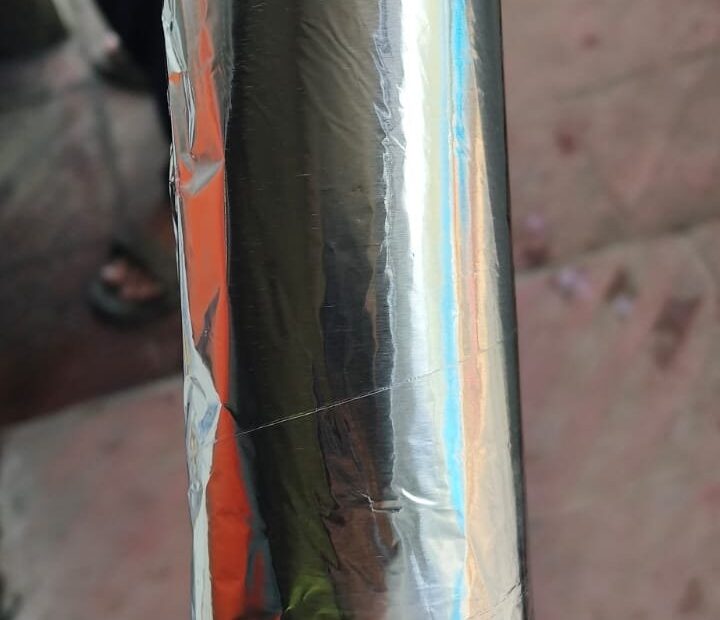
It would be easy to assume that lining a router with kitchen foil could improve Wi-Fi coverage, but the system researchers at Dartmouth College actually built is far more precise. Called WiPrint, it uses custom-shaped reflectors made from 3D-printed plastic coated with a thin layer of aluminium, each one designed to match the exact layout of a specific room.
The idea isn’t to block Wi-Fi or boost it by brute force. It’s about giving the signal direction. Instead of broadcasting evenly in every direction, a router fitted with a WiPrint reflector focuses more of its radio waves indoors, improving coverage in key areas while limiting unnecessary signal leakage outside the home.
Presented at the ACM International Conference on Mobile Computing and Networking, the project demonstrated signal strength gains of up to 6 decibels in target locations, reductions of up to 10 decibels in areas where coverage was intentionally minimised, and wireless throughput improvements of as much as 55%.
Researchers are careful to note that a reflector is not a substitute for good cybersecurity. A strong password, WPA3 encryption and regular firmware updates remain the most effective ways to protect a home network. What the reflector offers is a clever example of how physics, not more electricity or software, can solve everyday engineering problems.
Image: Wikimedia Commons/by ShriniwasGajare



Leave a Reply