Investigators searched for decades. This US Navy ship’s wreck has never been found
Despite advances in ocean mapping and underwater exploration, no confirmed wreckage of the USS Cyclops, lost in 1918 with 306 people aboard, has ever been located.
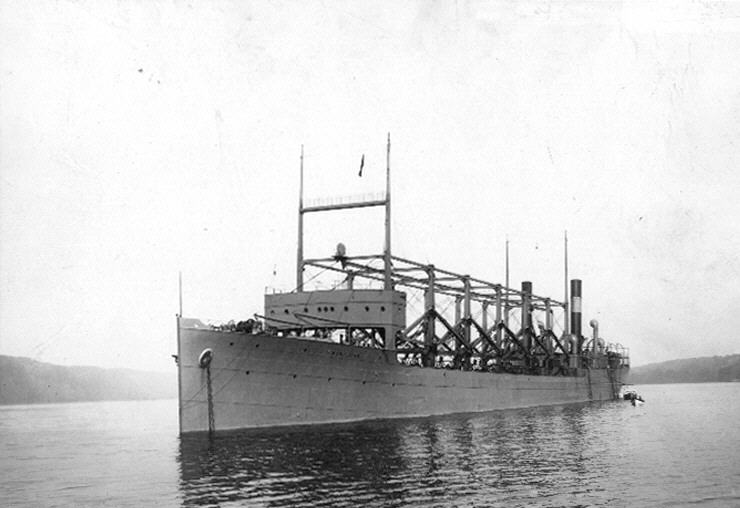
Despite decades of searches and modern advances in ocean mapping and underwater exploration, one of the U.S. Navy’s largest vessels of its era has never been found. The USS Cyclops departed Barbados on March 4, 1918, carrying approximately 11,000 tons of manganese ore and 306 officers, sailors and passengers, bound for Baltimore. It never arrived, and no confirmed trace of the ship has ever been recovered.
No distress signal was transmitted before the ship disappeared. More than a century later, the loss remains the single greatest non-combat loss of life in U.S. Naval history. The 540-foot Proteus-class collier, built in Philadelphia, had been reassigned during World War I to carry strategic cargo after previously transporting coal for the Navy’s fleet, according to the U.S. Naval Institute.
The lack of physical evidence has left investigators relying largely on historical documents, engineering analyses and witness accounts recorded before the ship’s final departure. Theories have ranged from mechanical failure and severe weather to overloading, with former executive officer Conrad A. Nervig arguing the ship may have suffered catastrophic structural failure after its dense manganese cargo was improperly distributed.
Popular theories linking the disappearance to German U-boats have been discounted by postwar German naval records, which found no submarines operating in the area at the time. Many maritime historians instead believe a combination of engine trouble, dense cargo and rough Atlantic conditions caused a rapid structural failure that left no time to send a distress call — a conclusion that, without a confirmed wreck, may never be proven.


Leave a Reply