Meet Nakuru And Yalinga: The Giraffes Who Can Count
Researchers in Barcelona found that giraffes can mentally combine hidden quantities of food to choose the larger total, a rare skill outside primates.
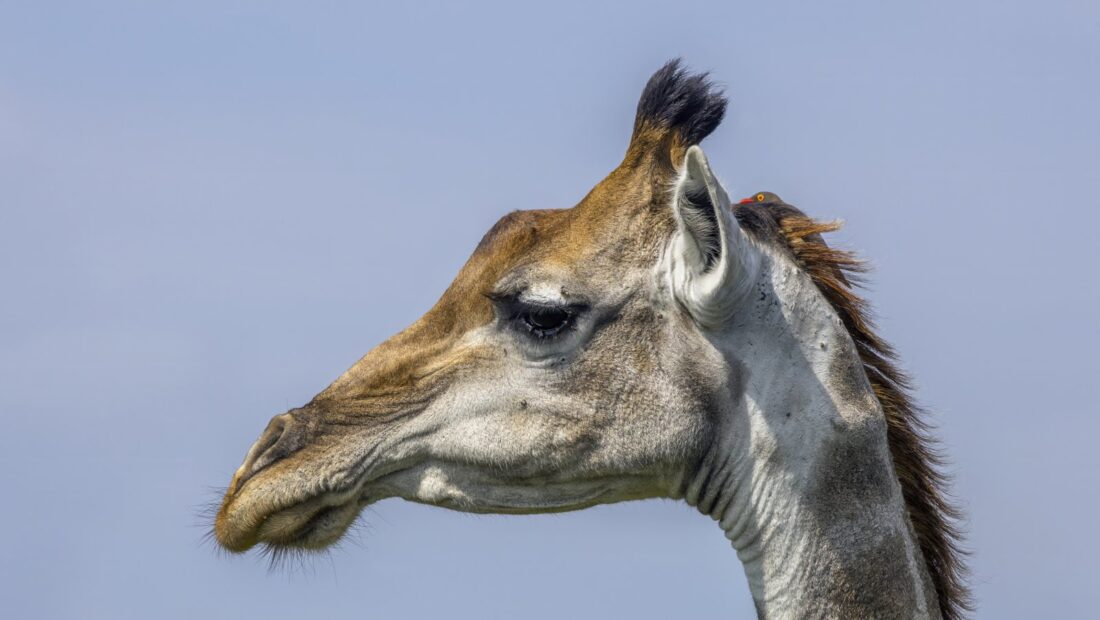
Nakuru, Njano, Nuru and Yalinga do not look like mathematicians, but according to a new study in ‘Scientific Reports’, these four giraffes at Barcelona Zoo can mentally add hidden quantities of food well enough to consistently choose the bigger total. The research, led by teams from the University of Barcelona and the University of Leipzig, describes it as a basic but genuine form of arithmetic reasoning performed without numbers or symbols.
In the experiment, researchers placed different numbers of carrot pieces into two covered containers in full view of the giraffe, then sealed the lids. A third container holding additional carrots was then poured into one of the sealed ones. To choose correctly, the giraffe had to recall each starting amount, mentally add the new carrots to the right total, and pick the container that now held more, all without a direct view of either final count.
The animals performed well, correctly choosing the larger total about 68% of the time, and could track amounts up to five items while mentally adding as many as three new pieces at once. Subtraction proved far harder: when carrots were visibly removed instead of added, accuracy fell to roughly 57%, a result close to chance.
This ‘addition is easier than subtraction’ pattern is not unique to giraffes. Human children typically master addition before subtraction, and chimpanzees have shown the same lopsided ability in earlier studies, succeeding at combining quantities but faltering when items are taken away.
The researchers took precautions against the Clever Hans effect, where an animal appears to solve a problem by reading a trainer’s cues rather than actually reasoning. The experimenter wore sunglasses and held a neutral expression during testing. When hand movements were used to nudge the giraffes toward an incorrect answer, two of the four, Nuru and Njano, still picked the container with the true larger total, evidence they were relying on memory and calculation rather than simply copying the tester.
Giraffes have small brains relative to their body size, and the authors argue their result undercuts the assumption that this kind of numerical skill demands a large brain-to-body ratio, as is typically assumed for primates, dolphins and parrots. They suggest the giraffe’s fission-fusion social groups and habit of judging which distant trees hold more food may have driven this ability instead of raw brain size.
Wikimedia Commons/by Charles J. Sharp

Leave a Reply