This 4.5-billion-year-old space rock punched through a roof, and rewrote what scientists know about early chemistry
A carbonaceous chondrite that fell on a New Jersey home in 2024 has proven to be an unusually pristine 4.5-billion-year-old sample containing amino acids and salt deposits linked to ancient liquid water.
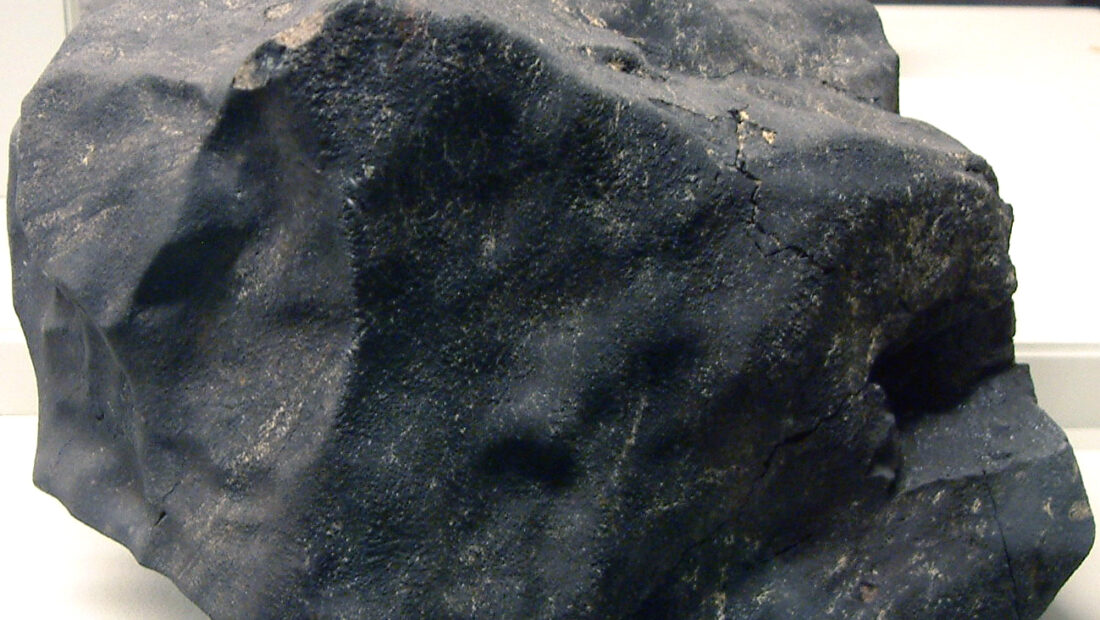
Long before Earth existed, a mixture of rock, water and organic chemistry was taking shape in the asteroid belt between Mars and Jupiter. A fragment of that ancient material eventually made its way to a bedroom in Hillsborough, New Jersey, when a meteorite crashed through a roof in 2024, giving researchers a rare, largely uncontaminated window into the solar system’s earliest chemistry.
Laboratory analysis classified the object, now called the Hillsborough meteorite, as a CM1/2 carbonaceous chondrite, a rare hybrid class that formed roughly 4.5 billion years ago, during the very early stages of the solar system. Some sections of the meteorite show clear signs of past reactions with water, while other sections remain largely unchanged, placing the sample between the CM1 group, which underwent more water alteration, and the CM2 group, which experienced fewer changes.
Scientists found organic materials and amino acids inside the fragments. These compounds are commonly associated with the building blocks of life, though their presence does not indicate that living organisms existed inside the meteorite. Instead, they provide direct evidence of the chemical conditions present before life appeared on Earth. Tiny mineral deposits found within the rock also pointed to salt-rich material, suggesting the parent asteroid once held areas where liquid water pooled and later evaporated, leaving minerals and salts behind.
The meteorite’s condition owes much to the events immediately after it landed. It arrived as a flash across the eastern United States sky on 16 July 2024, with witnesses from New York to New Jersey reporting a bright object and a loud sonic boom. The object, estimated at around 50 kilograms before breaking apart, eventually sent one fragment through the roof and ceiling of a bedroom, where the homeowner carefully handled it with gloves and stored it in containers rather than touching it directly.
That handling reduced contamination from skin oils and moisture, a common problem for carbon-rich meteorites that can easily exchange material with their surroundings. Although some fragments picked up small traces of the roof and carpet they struck, much of the original space material stayed intact, leading scientists to describe the samples as some of the best-preserved of their type.
Researchers also traced the meteorite’s path before it landed, using public videos, security camera footage and weather radar from Newark Airport, which picked up a trail of smaller fragments falling across the region as the object broke apart in the atmosphere. The combined data indicates the meteorite came from the inner region of the asteroid belt.
Image credit: Wikimedia Commons/by James St. John


Leave a Reply