Wildlife Institute of India and state forest departments drive Great Indian Bustard recovery effort
The Wildlife Institute of India and the forest departments of Rajasthan and Gujarat have been credited for the scientific breeding and monitoring behind a Great Indian Bustard conservation milestone.
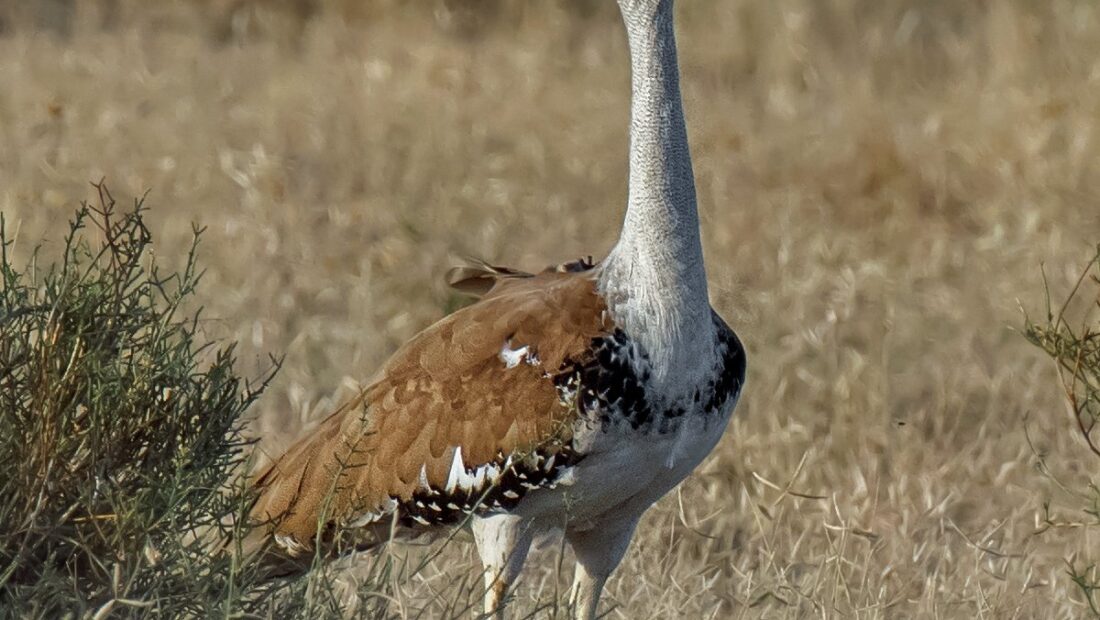
Union minister for Environment, Forest and Climate Change Bhupender Yadav has credited the Wildlife Institute of India and the forest departments of Rajasthan and Gujarat for their role in scientific breeding, habitat management and continuous monitoring behind a milestone in the conservation of the critically endangered Great Indian Bustard.
In a post on his official X account on Friday, Yadav said captive-breeding centres at Sam and Ramdevra in Rajasthan’s Jaisalmer district have produced 98 Great Indian Bustard chicks, and that India’s conservation programme for the species is now preparing to release captive-bred birds into the wild under its next phase of rewilding.
‘Extensive scientific preparations are underway to ensure the safe release of captive-bred birds into the wild. Necessary infrastructure, monitoring systems and management protocols are being put in place to maximise the birds’ chances of survival,’ he said. The progress was reviewed during the 91st meeting of the Standing Committee of the National Board for Wildlife, held at the Central Academy for State Forest Service in Coimbatore, Tamil Nadu, on Friday.
Yadav also pointed to a second ‘Jump Start’ intervention carried out in Naliya, Gujarat, where a chick born on May 21, 2026, has crossed the critical 40-day survival period, one of the most vulnerable stages in the bird’s life. Wildlife experts said the combination of scientific captive breeding and the upcoming rewilding programme has significantly improved the prospects for the species’ recovery.
Leave a Reply