A yellow robot in Greenland’s waters is tracking a planetary alarm
An uncrewed ocean probe drifting off Greenland is part of a global effort to determine whether a critical Atlantic current that shapes the region's climate is starting to break down.
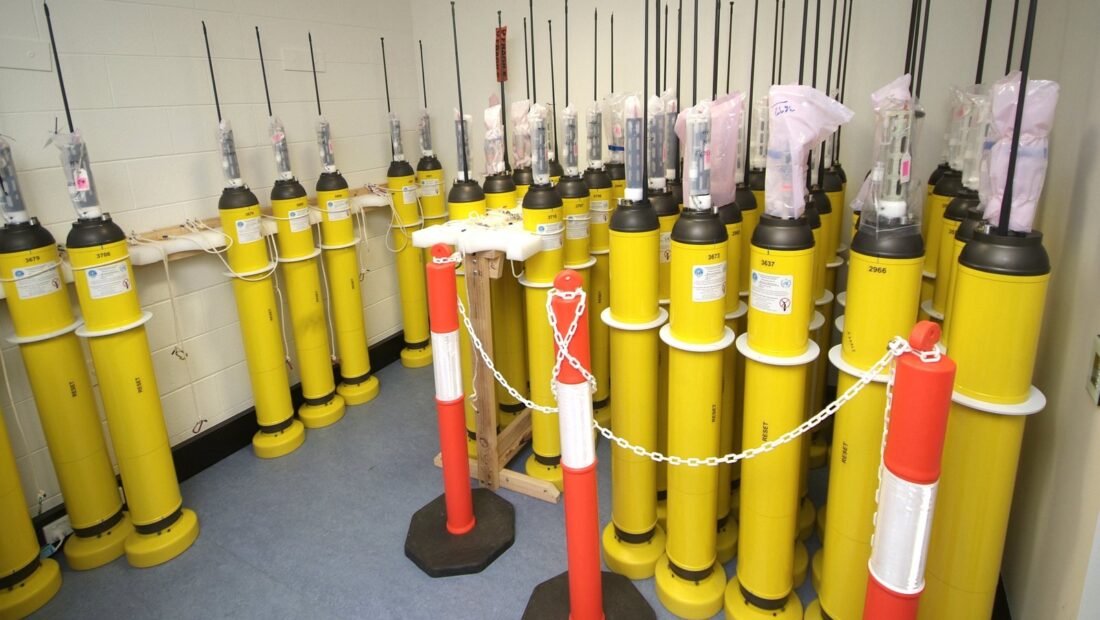
In the deep waters off Greenland, a bright yellow, human-sized probe drifts silently, according to a BBC report. It carries no crew, only sensors, and it follows a steady routine: diving deep, riding the ocean currents, measuring temperature, pressure and salt levels, then surfacing briefly to beam its findings to a satellite before sinking back down.
The float is one of many taking part in a global effort to map one of the ocean’s biggest mysteries: how its hidden movements shape the climate above. Researchers are watching to see whether the Atlantic Meridional Overturning Circulation, or AMOC, is beginning to fundamentally shift.
The AMOC works as a planetary conveyor belt, pulling warm surface water from the tropics toward the Arctic and sending colder, denser water thousands of miles back south through the deep ocean. It carries about one petawatt of heat northward, roughly 50 times the total power humanity consumes, and explains why Britain has a milder climate than other places at the same latitude.
Scientists broadly agree that the AMOC will weaken as the planet warms. The debate is over the pace of that change, and what it will mean for the seasons. Some point to a patch of unusual cooling in the North Atlantic, known as the ‘cold blob,’ as an early fingerprint of a slowing current, a view held by Stefan Rahmstorf of the Potsdam Institute for Climate Impact Research, who has studied the system for three decades.
Rahmstorf, who once considered a full AMOC shutdown a highly unlikely worst-case scenario, now believes recent data and modelling show the risk of crossing a tipping point is real, and that crossing it could make a shutdown self-amplifying and unstoppable. A disrupted AMOC could bring colder, drier winters and more volatile weather to the UK and northwestern Europe, while also affecting the West African monsoon and tropical rainfall belts that hundreds of millions of people in the Amazon and Africa depend on.
Other researchers urge caution. Andrew Watson of the University of Exeter has said the AMOC has changed before in Earth’s past and may simply reorganise its sinking zones rather than collapse outright, and a UK Met Office study found a full shutdown is unlikely this century. The Intergovernmental Panel on Climate Change’s 2021 assessment expects the current to weaken in the coming decades but not stop before 2100, even as scientists say their understanding of the system keeps evolving.
Wikimedia Commons/by Bruce Miller, CSIRO


Leave a Reply