How tiny ocean microbes may have triggered one of Earth’s earliest ice ages
A new review says oxygen released by ancient cyanobacteria reacted with methane in the atmosphere, weakening the greenhouse effect and possibly triggering the Huronian glaciation.
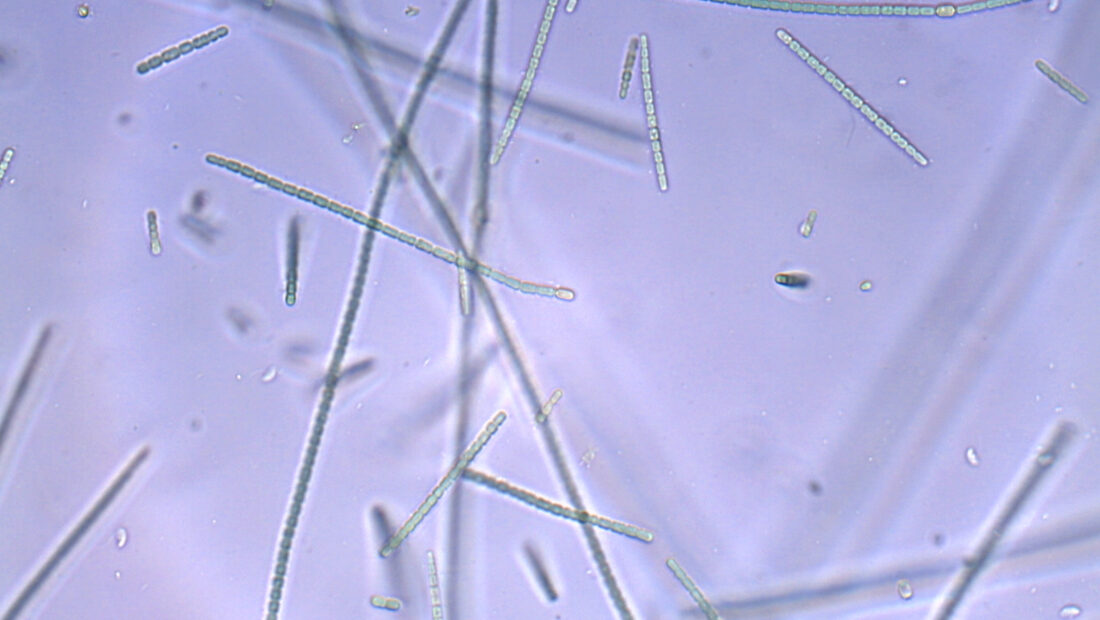
Roughly 2.4 billion years ago, a shift in the chemistry of the atmosphere may have plunged Earth into one of its earliest known ice ages — and the culprit was not a volcano or an asteroid, but photosynthesis performed by microscopic cyanobacteria.
According to a study titled ‘Paleobiological Perspectives on Early Microbial Evolution’, oxygen released by these organisms reacted with atmospheric methane, a greenhouse gas far more potent than carbon dioxide, causing methane concentrations to fall sharply. Scientists suggest this weakened Earth’s greenhouse effect at the time, potentially contributing to the Huronian glaciation, one of the planet’s earliest recorded ice ages. The exact relationship between the two events remains an active area of research, but declining methane levels are widely considered an important consequence of rising atmospheric oxygen.
This shift is part of what scientists call the Great Oxidation Event, described in a separate review, ‘The rise of oxygen in Earth’s early ocean and atmosphere’, published in Nature. Before this event, Earth’s atmosphere was almost entirely devoid of oxygen, with methane and carbon dioxide dominating instead while simple microbial life thrived in oxygen-free conditions.
The review notes that oxygenation was a long, drawn-out process rather than a single switch. Free oxygen accumulated in the atmosphere first, lagged in the oceans afterward, and only reached levels close to modern ones some two billion years later. Cyanobacteria are believed to have evolved oxygen-producing photosynthesis hundreds of millions of years before atmospheric oxygen actually began building up, because the gas they released was initially absorbed by dissolved iron and other reduced compounds in the ocean and crust.
Evidence for the timing comes from ancient sedimentary rocks, where geologists have found a sudden disappearance of mass-independent fractionation of sulfur isotopes dating to about 2.4 billion years ago — a signature that can only exist under extremely low oxygen conditions. Its disappearance is one of the clearest markers that oxygen levels in the atmosphere had risen.
The rise of oxygen also proved toxic to many microorganisms that had dominated early ecosystems, even as it opened the door for organisms that could use oxygen far more efficiently to generate energy. The Annual Review of Earth’s Planetary Sciences notes that this event laid the foundation for the later evolution of complex eukaryotic cells and, eventually, multicellular life.
Wikimedia Commons


Leave a Reply