Scientists Declared It Extinct For 66 Million Years: A Fishing Net Off South Africa Proved Them Wrong
Scientists had written off the coelacanth as extinct for roughly 66 million years before one was found alive in a South African fishing net in 1938.
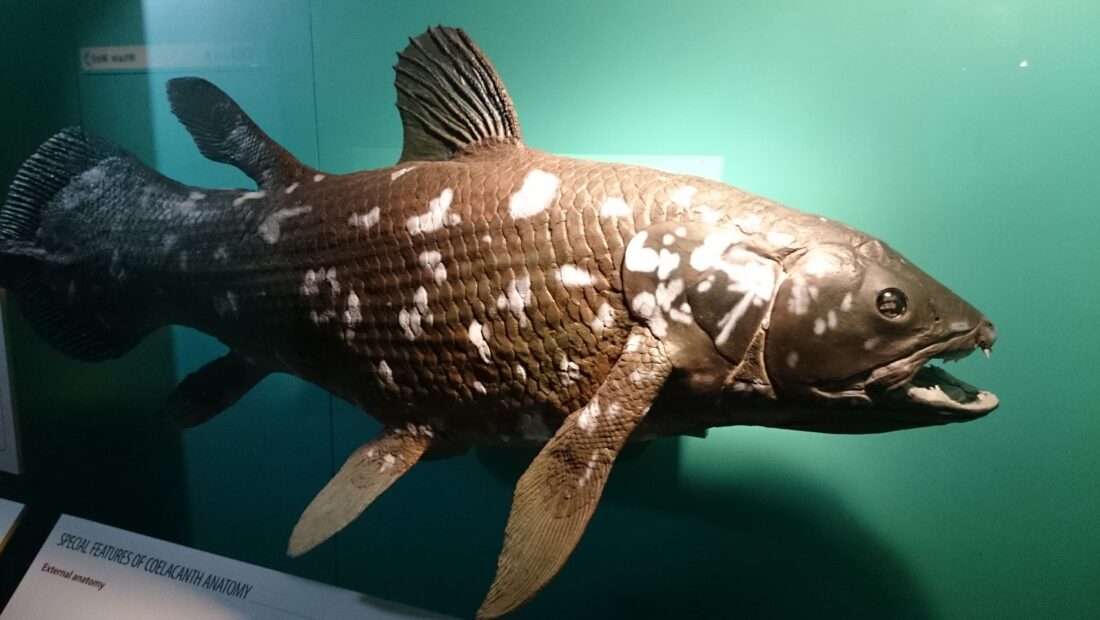
Few animals earn the label ‘living fossil’ as dramatically as the coelacanth, a fish that scientific literature had written off as extinct for roughly 66 million years, only for it to turn up very much alive in a fishing net off South Africa in December 1938.
The fish that came up in the trawler’s catch that day was about 1.5 metres long, with heavy, armour-like scales and fleshy fins unlike anything local museum curator Marjorie Courtenay-Latimer had ever seen. Recognising something was unusual, she reached out for expert help.
South African ichthyologist J.L.B. Smith examined the preserved specimen weeks later and realised it belonged to a group previously known only from fossils dating back long before the dinosaurs. He named it Latimeria chalumnae, after Courtenay-Latimer and the Chalumna River near the catch site, per the Natural History Museum.
Coelacanths had escaped detection because of where they live: hundreds of metres down in deep marine waters, hiding in underwater caves during the day and hunting squid, cuttlefish and smaller fish at night, far below where people routinely observe marine life. Fishermen in the Comoros Islands, however, already knew the fish locally as ‘gombessa’ long before it stunned Western science.
The discovery briefly fuelled excitement that the coelacanth might be a missing evolutionary link between sea life and the first animals to walk on land. Later studies complicated that story: genetic research has since shown lungfish share a closer relationship with land vertebrates, though the coelacanth still holds onto unusual traits, including a flexible notochord instead of a bony spine and a rare skull joint enabling an unusually wide mouth opening.
The story did not end in 1938. A second specimen surfaced in the Comoros Islands in 1952, and in 1997 a coelacanth turned up at a market in Indonesia that genetic analysis identified as an entirely separate species, Latimeria menadoensis, evidence that this ancient lineage was more varied, and more resilient, than anyone had expected.
Wikimedia Commons/by Nkansah Rexford

Leave a Reply