The Ocean Near Australia Has Its Own ‘Fueling Stations’: Here’s What They Do
Researchers have identified ocean regions near Australia that act as moisture 'fueling stations' for atmospheric rivers before they trigger major floods elsewhere.
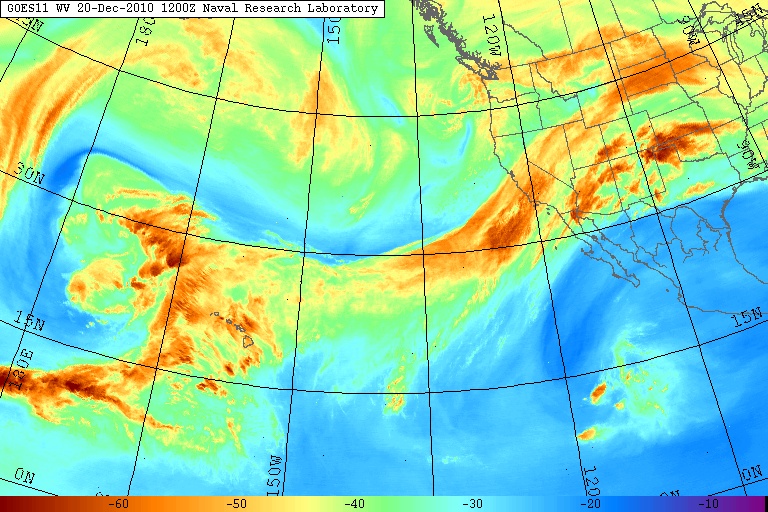
Long before a flood hits a coastline thousands of kilometres away, it may already be taking shape over open ocean near Australia. That is the finding of a new study in Climate and Atmospheric Science, which has mapped, for the first time, the specific ocean regions that supply atmospheric rivers with the moisture they eventually dump as torrential rain.
Atmospheric rivers are long, narrow corridors of concentrated water vapour, capable of stretching for thousands of kilometres while spanning only a few hundred kilometres in width. Despite decades of study, exactly where they gathered most of their moisture had remained unclear. To answer that, researchers combined more than 40 years of satellite observations, weather reanalysis data and computer modelling to trace these systems across their full lifetimes.
The analysis revealed that atmospheric rivers do not collect water evenly along their paths. Instead, they pass through a small number of ocean regions where warm surface waters and specific wind patterns cause huge volumes of evaporation. Areas in the eastern Indian Ocean and western Pacific, close to Australia, emerged as some of the most significant of these moisture ‘source regions’ anywhere on the planet.
Once loaded with moisture, these systems can travel on to Australia, New Zealand, South America or Antarctica, depending on the weather patterns steering them. The study found that some atmospheric rivers pick up water from multiple ocean regions during their journey, while others depend almost entirely on just one source, a distinction that could matter for predicting how they behave.
These systems are also responsible for moving close to 90% of all the water vapour that shifts from the tropics towards the poles, according to the research. When an atmospheric river makes landfall and is forced upward by mountains or a weather front, that moisture condenses into rain or snow, and if the system stalls, the resulting downpours can cause severe flooding and landslides — as seen in past disasters across Australia, California, western Europe, South America and New Zealand.
Scientists say the discovery gives forecasters a new tool: instead of watching only near-coastal conditions, they can now monitor the ocean hotspots where atmospheric rivers gather strength well before landfall, potentially buying valuable extra time to prepare for floods. The team also points out that warming oceans could increase evaporation from these very regions, adding more fuel to future atmospheric rivers as the climate changes.
Image credit: Wikimedia Commons


Leave a Reply