This footage of a goblin shark sat unnoticed in an archive for years before anyone realised what it was
A 2019 deep-sea expedition video quietly captured the first-ever wild goblin shark sighting years before researchers recognised what they were looking at.
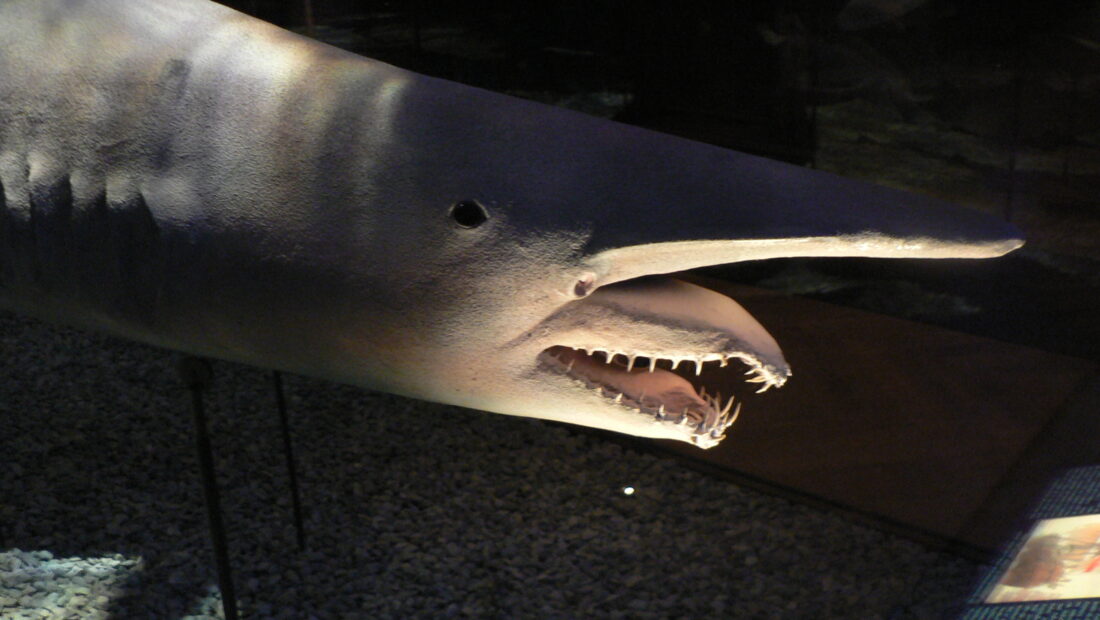
One of the most remarkable parts of a new goblin shark discovery didn’t come from a fresh expedition at all — it came from footage that had been sitting in an archive for years, unrecognised for what it actually showed.
The clip originated from a 2019 Ocean Exploration Trust expedition aboard the vessel E/V Nautilus, which explored deep-sea ecosystems around Kingman Reef, Palmyra Atoll and Jarvis Island within the Pacific Remote Islands Marine National Monument. Researchers at the University of Hawai’i later archived and annotated the footage for public access, without realising it contained something significant.
That changed in 2025, when Aaron Judah, a doctoral candidate at UH Mānoa’s Deep-Sea Animal Research Center, spoke with colleagues who mentioned that a possible goblin shark had appeared in footage recorded during a livestreamed dive near an unnamed seamount northwest of Jarvis Island. “I was shocked to hear this because this species was not known to be in the Central Pacific,” Judah said. After reviewing the recording, he confirmed it showed a goblin shark swimming naturally in the deep sea — the first time the species had ever been documented alive in its own habitat.
The finding, published in the Journal of Fish Biology, gained further weight five years later when a second goblin shark was independently filmed during a 2024 expedition to the Tonga Trench, confirming the first sighting was no anomaly.
Together, the two encounters, hundreds of kilometres apart, suggest goblin sharks range across a much wider stretch of the Pacific Ocean than previously documented, and the Tonga Trench observation also set a new depth record for the species — nearly 700 metres deeper than it was known to live.
Leave a Reply